History · Sacred places

From the god Taotor to St Christopher: the sacred caves of the Melendugno coast

For more than two thousand years, sailors on this stretch of the Salento coast stopped in its caves to pray. First to Messapian gods, then to Christian saints. Here is what the evidence actually tells us.
Published 21 November 2026 · ApuliaOutdoor

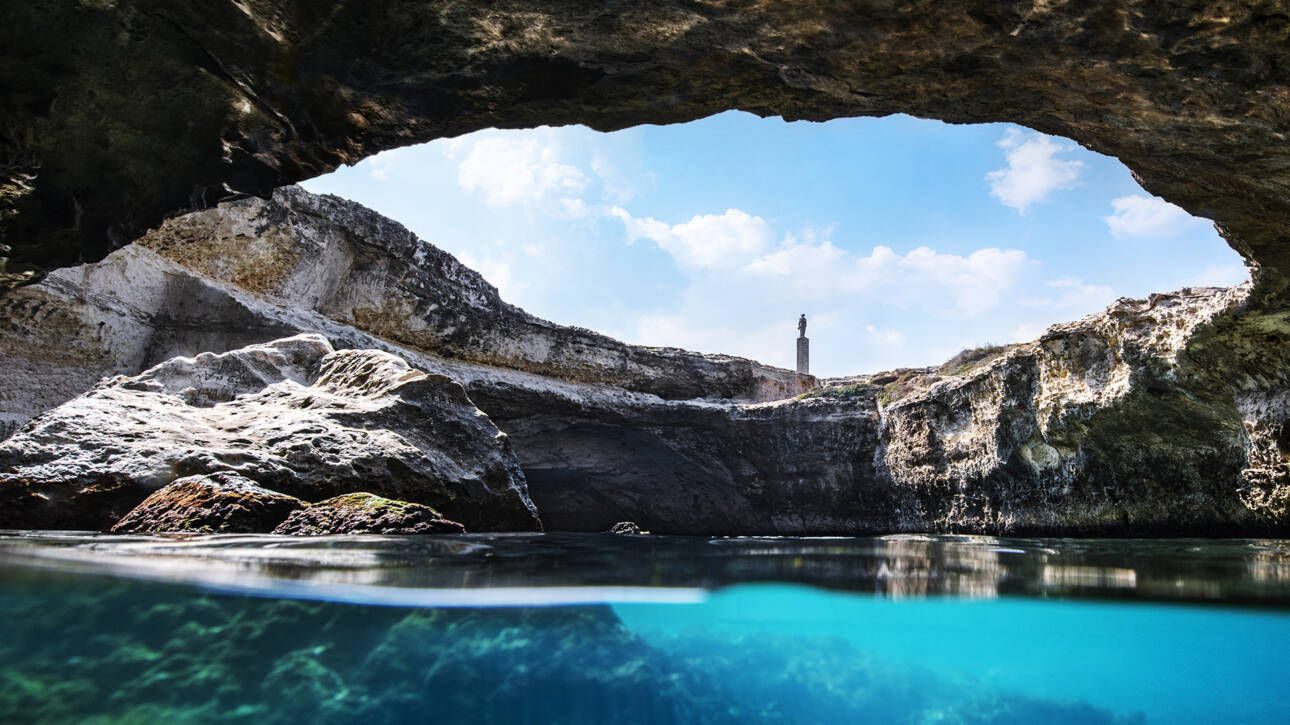
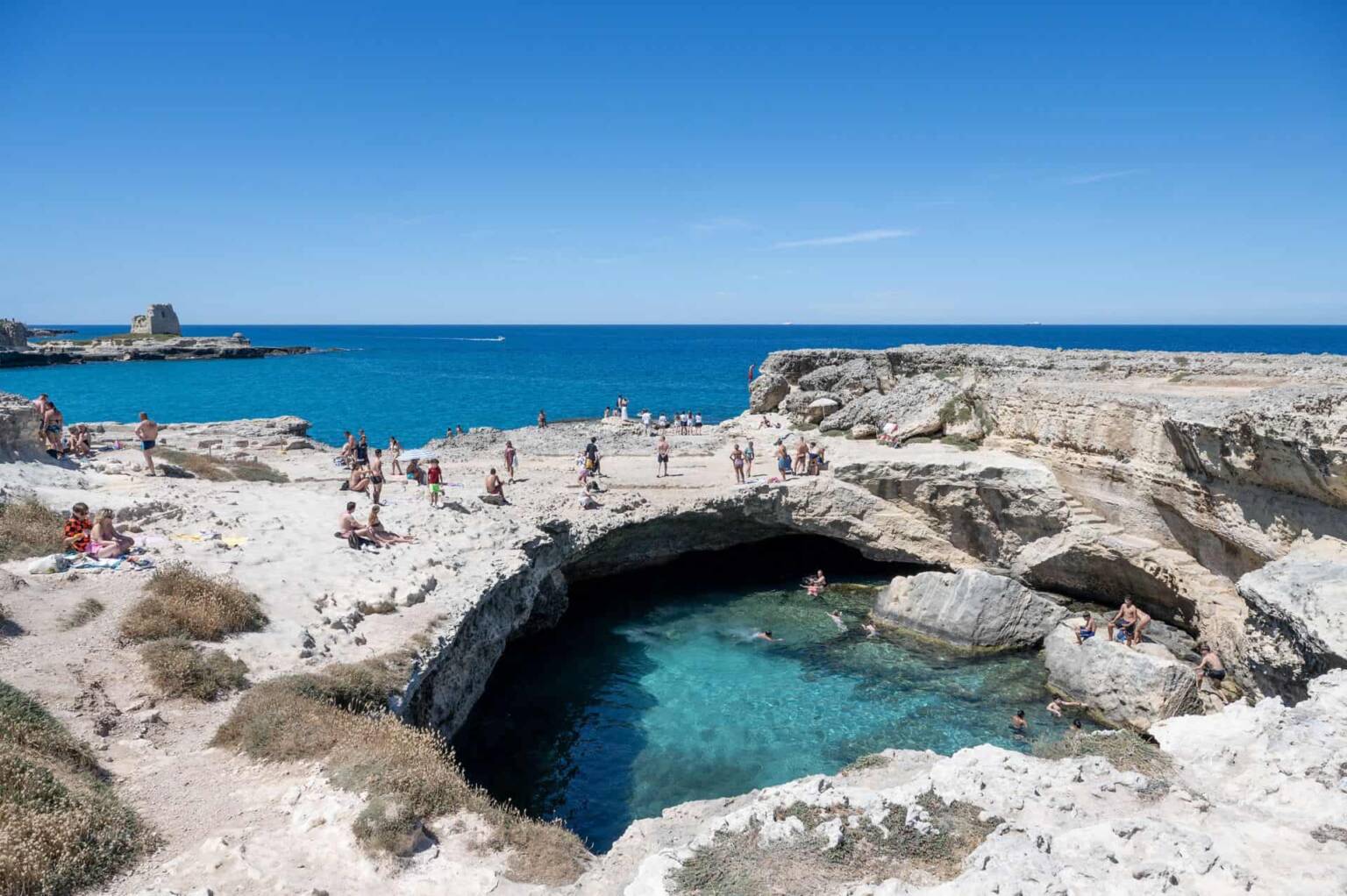
The Grotta della Poesia at Roca Vecchia seen from above, with the Roca tower in the background

A coast of sanctuaries, not a single cave

Within a few kilometres of coastline between Roca Vecchia and Torre dell’Orso there are three sacred places that together span more than two millennia: the Grotta della Poesia, the cave of St Christopher and the sanctuary of the Madonna di Roca. Recent research reads them as part of a network of coastal sanctuaries on the lower Adriatic, used by people crossing the Strait of Otranto, the narrowest stretch of sea between Italy and the Balkans: you asked for protection before setting sail and gave thanks once you had landed.

It is a story of continuity, but it deserves to be told precisely. In one case the sources document a pagan sanctuary turning Christian; in another, continuity is only a hypothesis; in the third, a church grew out of a cave whose origins nobody knows. Let’s take them one at a time.

iDates and facts come from the archaeological studies listed at the bottom of the page. Where something is a hypothesis or a tradition, we say so.

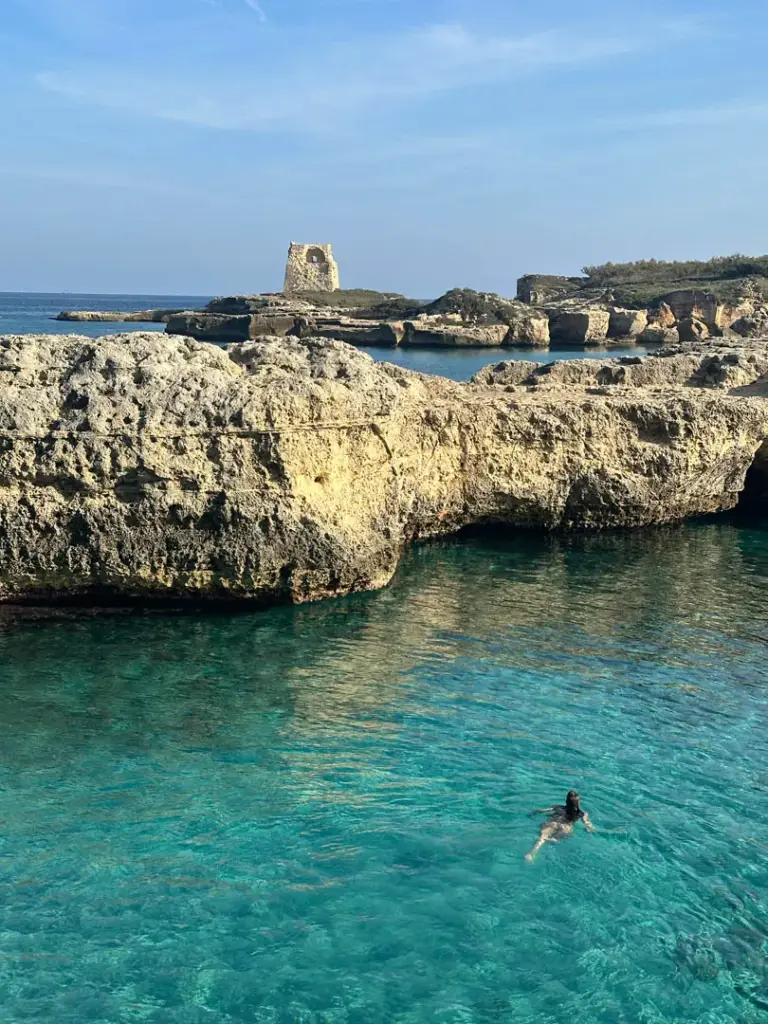
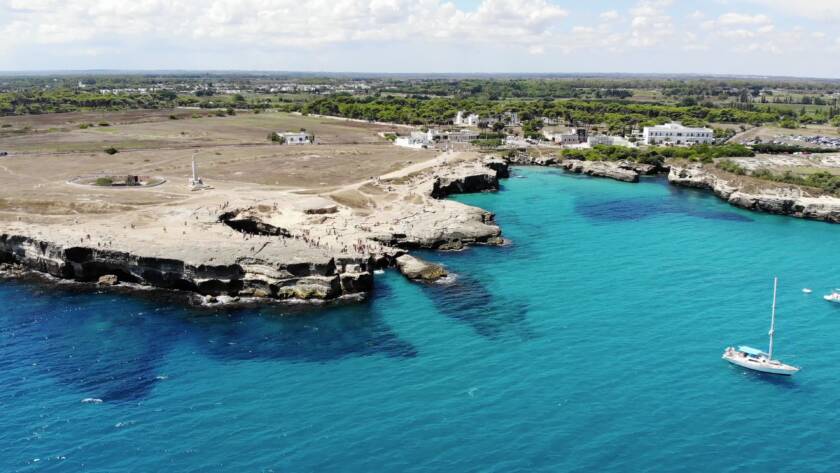
The coast of Roca Vecchia with its coves and the Roca tower
The coast at Roca Vecchia: sailors crossing the Strait of Otranto passed these coves. Photo ApuliaOutdoor.

Grotta della Poesia: the sanctuary of Taotor

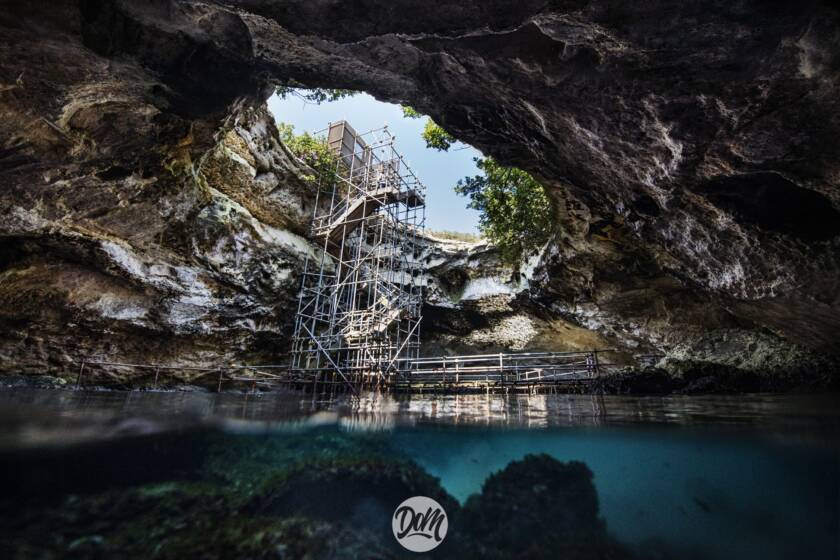
The Grotta della Poesia is a karst system with three chambers: the Poesia Grande, whose roof has collapsed, a middle cave and, beyond a short underwater passage, the Poesia Piccola. In this innermost chamber, where a freshwater spring rises, the walls are covered in inscriptions over more than 600 square metres, written on top of even older graffiti.

The Messapian inscriptions begin in the second half of the 4th century BC; Latin ones appear from the late 3rd century, while Greek is rare, with just two texts. Ritual writing continues until the 2nd century BC, when the settlement at Roca appears to have been abandoned. Dozens of Latin texts are still unpublished.

Who they prayed to

The god invoked is Taotor Andirahas, who becomes Tutor in the Latin inscriptions. Scholars consider him plausibly linked to the underworld. A few inscriptions also name Dama, a goddess identified with Demeter. The prayers open with the verb “to hear”: klahoi Venas Zis, where Zis is most likely the local counterpart of Zeus. For more on the god and his many names, read our page on Taotor.

What they asked for

The Latin inscriptions mention offerings of sheep and goats and measures of wine. One of the most moving was left by a slave, Muscus, who tied his gift to a condition: si liberus factus eret, “if he were made free”. All the inscriptions are in the innermost part of the cave: worshippers crossed the whole system, perhaps along a ritual route, before reaching the place where they wrote.

And after the Messapians?

Here honesty matters. Some websites say the cave remained in use until early Christian times, and large carved crosses have been recorded nearby. But the most recent archaeological studies, which list the coastal sanctuaries where worship continued into the Middle Ages, do not include the Grotta della Poesia. The crosses are later marks; they do not prove the cave became a Christian place of worship. The history of the research, from the 1983 discovery to today, is on our History and excavations page.

The cave of St Christopher: where a pagan shrine became Christian

At Torre dell’Orso, a few kilometres south, is the case the sources document best. The bay was already used for worship in the 6th century BC. In the 4th century BC the area was reorganised and a cave was cut about five metres above the beach: a rectangular room with a rock bench on three sides and a terrace fitted out for rituals.

The votive inscriptions, from the 1st century BC into the Roman Imperial period, were left by people arriving by sea: dedications and wishes for a safe voyage, euploia in Greek. From the 4th century AD, when erosion had already made the terrace unusable, the cave stayed sacred, but became Christian: people kept writing on the walls, now addressing St Christopher, the saint who carried travellers from one shore to the other. The Christian inscriptions run through the Byzantine period up to the 13th century.

Same cave, same sailors, same wish to reach the other side safely: only the name of the one listening changed.

This is the transition people often imagine for every cave on this coast. At St Christopher it is documented; at the Grotta della Poesia it is not.

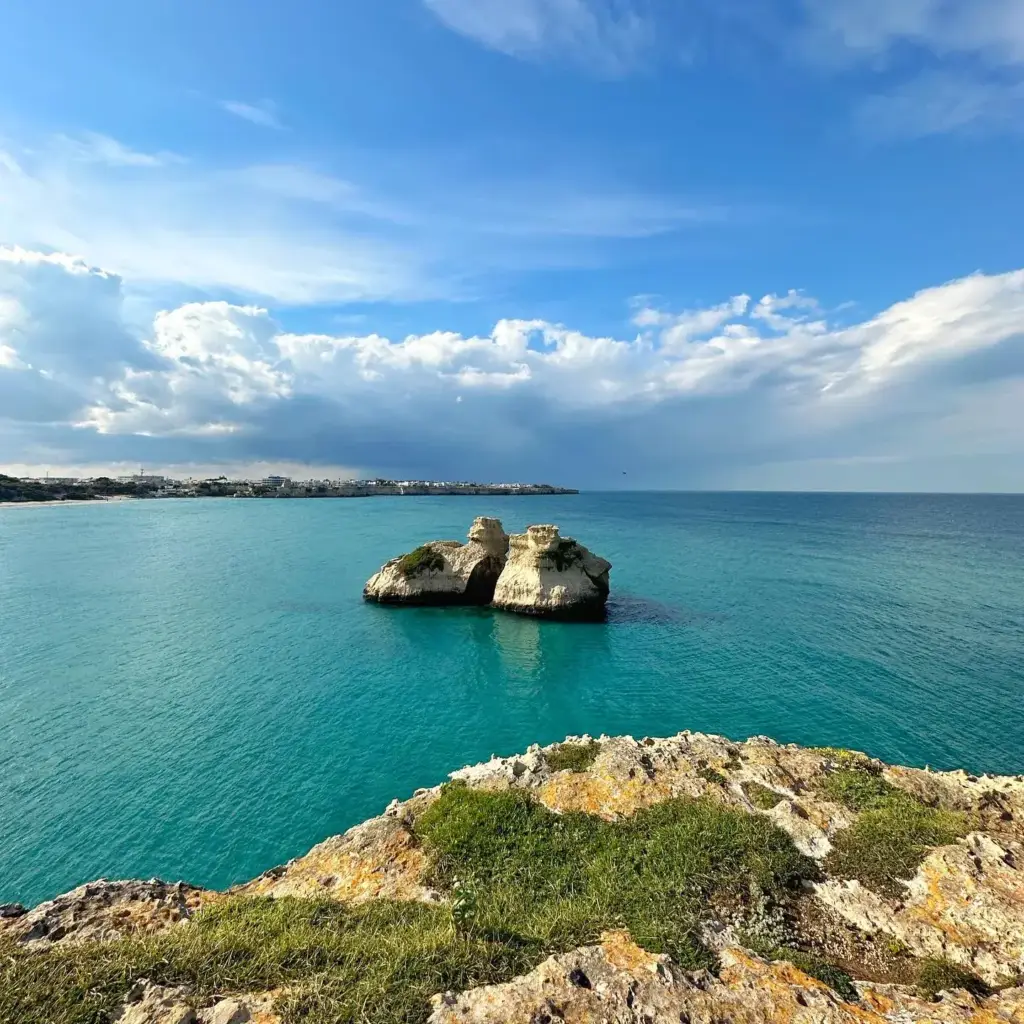
The sea at Torre dell'Orso with the Due Sorelle sea stacks, Melendugno
The bay of Torre dell'Orso and the Due Sorelle sea stacks: the cave of St Christopher is in this bay. Photo ApuliaOutdoor.

Hermits and monks in the caves of Roca

In the early Middle Ages the limestone caves of this coast were inhabited again, first by hermits, many of them from the Byzantine East, then by Greek monks. Roca suffered Saracen raids in the 9th and 10th centuries, was rebuilt and fortified in the 14th century by Walter VI of Brienne, was occupied by the Ottomans in 1480 as a base against Otranto and was finally razed in 1544 so that it could no longer serve pirates. The story of the headland is told in our guide to Roca Vecchia.

The Madonna di Roca: a church born in a cave

On the headland, a short walk from the Grotta della Poesia, stands the sanctuary of the Madonna di Roca, dedicated to Our Lady of Graces, also known as the Virgin of Mercy. Its origins are unknown. It is a partly underground church with three naves, built over an ancient rock-cut chamber, possibly a Byzantine cave. Its monolithic columns, with Composite-Corinthian capitals, come from a Roman building: ancient materials reused, as often happened.

Beneath the church is a karst cave, partly filled with rubble from the collapsed apse. Tradition says the icon and a statue of the Madonna were kept there, and that the image was found by a young shepherd from Roca looking for a lost lamb.

What the records say

  • 1656On 30 May Bishop Pappacoda still describes a “crypt” and the first pilgrimages.
  • 1695On 10 November Bishop Michele Pignatelli visits the chapel of the Blessed Virgin of Mercy “in Roca veteri”, recently built with the alms of the faithful.
  • 1830On 24 September Bishop Nicola Caputo visits: with indulgences granted by Pope Leo XII, processions arrive from Melendugno, Calimera, Borgagne and Vernole.
  • 1911On 27 July Bishop Gennaro Trama visits the sanctuary.

To this day the villages where Roca’s inhabitants resettled still make the pilgrimage in spring: Vernole on the last Saturday of April, then Calimera, Melendugno and Borgagne on the first three Saturdays of May.

And a pagan cult beneath the church? It is an appealing idea, but no source documents it. What you can see is the continuity of a place: a cave, Roman columns, a church and a pilgrimage that has lasted for centuries.

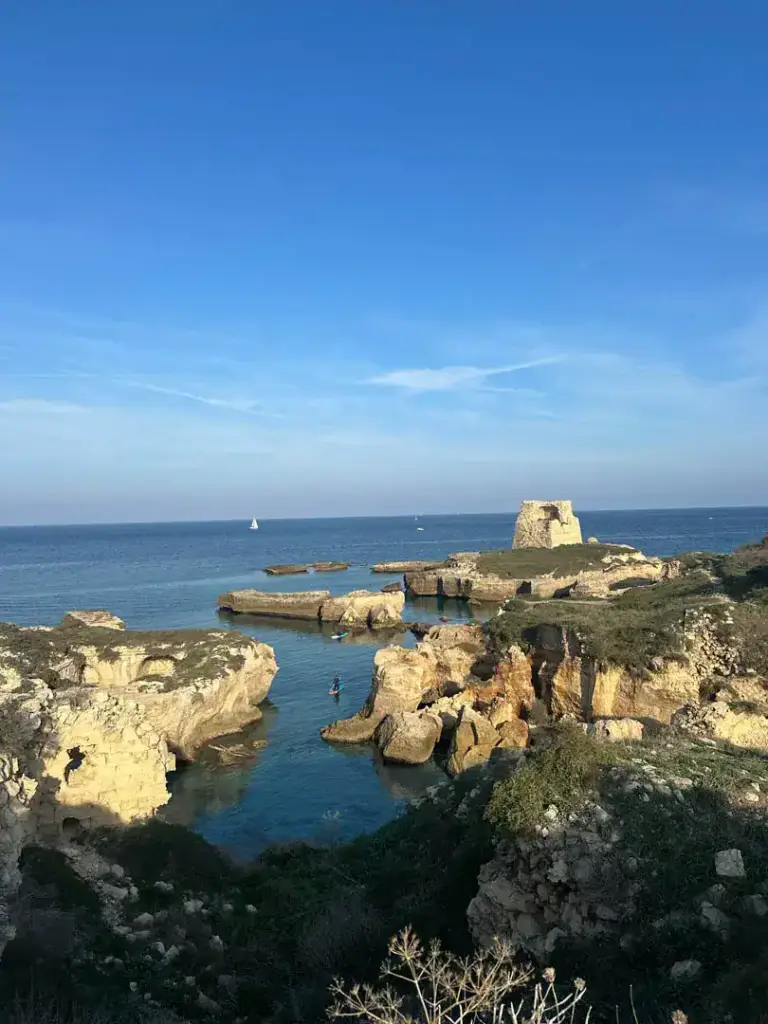
The cliffs of Roca Vecchia and the Roca tower seen from the sea
The cliffs of Roca and the 1568 watchtower: the Madonna di Roca sanctuary stands on the same headland. Photo ApuliaOutdoor.

Visiting the three sites

  • Grotta della Poesia: visited from the paths of the Roca archaeological area, with a ticket. Swimming and diving are not allowed. Opening hours and tickets on the website of the Comune di Melendugno.
  • Cave of St Christopher: in the bay of Torre dell’Orso. The cliff is subject to erosion, so respect any barriers and signs on site.
  • Madonna di Roca: on the Roca headland, a few minutes’ walk from the Grotta della Poesia.

The three sites lie on the coastal loop, about 30 km from Melendugno and almost flat: roughly two hours in the saddle, plus time for the stops. ApuliaOutdoor has put together a bike itinerary of the sacred caves, with the bike delivered to where you are staying. The Taotor cycle route, named after the god of the Grotta della Poesia, also passes through Roca.

Frequently asked questions

What was worshipped in the Grotta della Poesia?

The Messapian god Taotor Andirahas, called Tutor in the Latin inscriptions and plausibly linked to the underworld. A few inscriptions also name Dama, a goddess identified with Demeter. The texts date from the second half of the 4th to the 2nd century BC.

Did the Grotta della Poesia become a Christian shrine?

There is no evidence that it did. Crosses were carved near the cave, but the most recent archaeological studies do not list it among the coastal sanctuaries where worship continued into the Middle Ages.

Which cave near Melendugno went from pagan to Christian worship?

The cave of St Christopher (Grotta di San Cristoforo) at Torre dell'Orso. It was a sailors' sanctuary in Messapian and Roman times; from the 4th century AD it became Christian, and inscriptions to the saint continue until the 13th century.

Is the Madonna di Roca sanctuary built on a pagan temple?

No source says so. The church stands over an ancient rock-cut chamber, possibly a Byzantine cave, and reuses monolithic columns from a Roman building. Its origins remain unknown.

Can I visit these places by bike?

Yes. Torre dell'Orso, the Grotta della Poesia and the Madonna di Roca are all on ApuliaOutdoor's coastal loop, a self-guided ride of about 30 km from Melendugno, almost flat: briefing, route for your phone or Garmin and support, with a guide on request.

The sacred caves by bike

A self-guided loop of about 30 km from Melendugno links Torre dell'Orso, the Grotta della Poesia and the Madonna di Roca. A briefing before you set off, the route for your phone or Garmin and support on the road; bike hire from €30 a day.

  • Free delivery between Melendugno, Lecce and Otranto
  • Scott e-bikes and premium bikes, helmet and lock included
  • A guide on request, in Italian, English or French
See the bike itineraryWhatsApp +39 327 897 4712
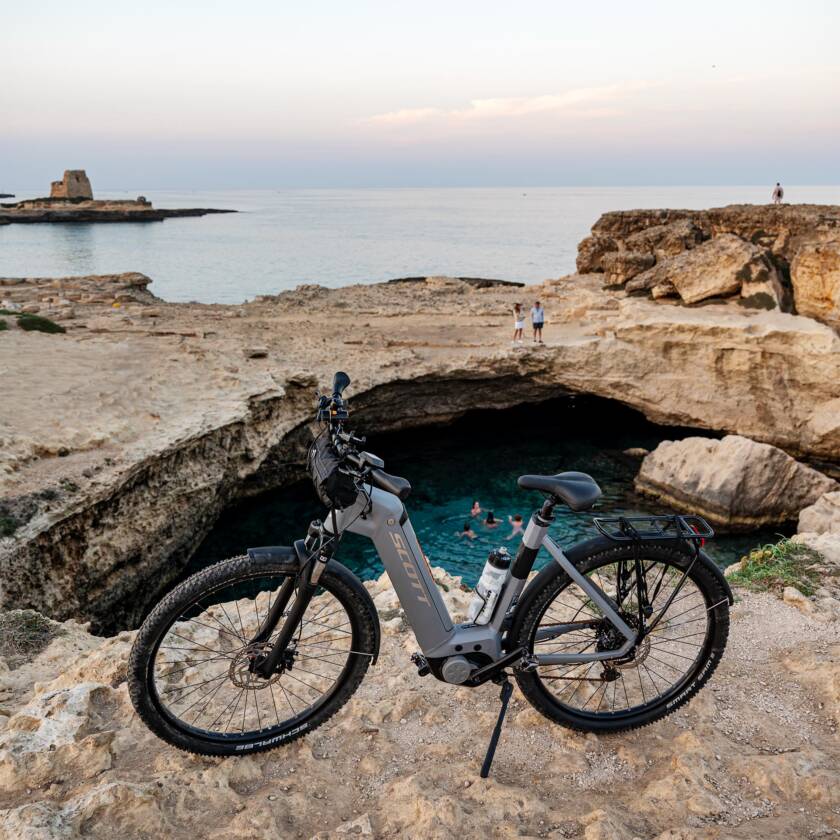
An ApuliaOutdoor e-bike at the edge of the Grotta della Poesia