Roca Vecchia · Salento, Puglia
Grotta della Poesia
Salento's most famous natural pool: 2026 tickets, visiting rules, the story of the excavations and how to get there, including by bike.
Updated 10 November 2026 · ApuliaOutdoor
What is the Grotta della Poesia?
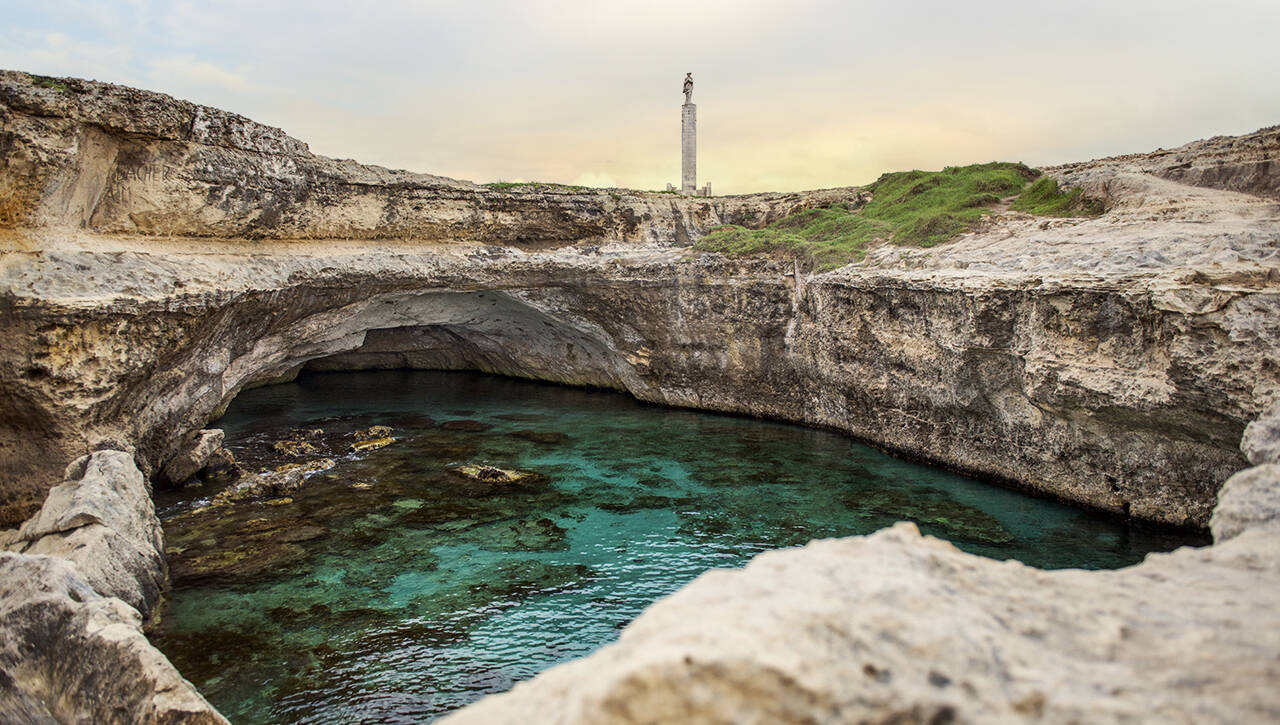
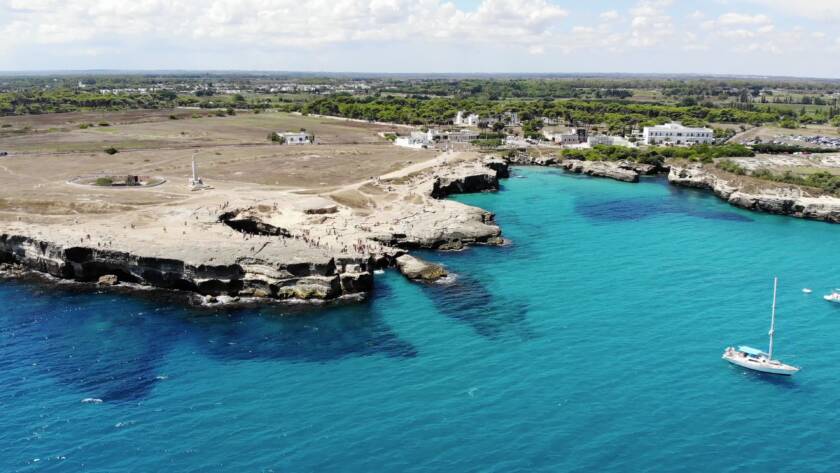
The Grotta della Poesia, often called the Cave of Poetry, is a natural seawater pool at Roca Vecchia, on the Adriatic coast of Salento in southern Puglia. There are actually two caves, formed the same way: karst cavities carved by the sea whose roofs collapsed, leaving open-air pools connected to the sea by underwater passages.
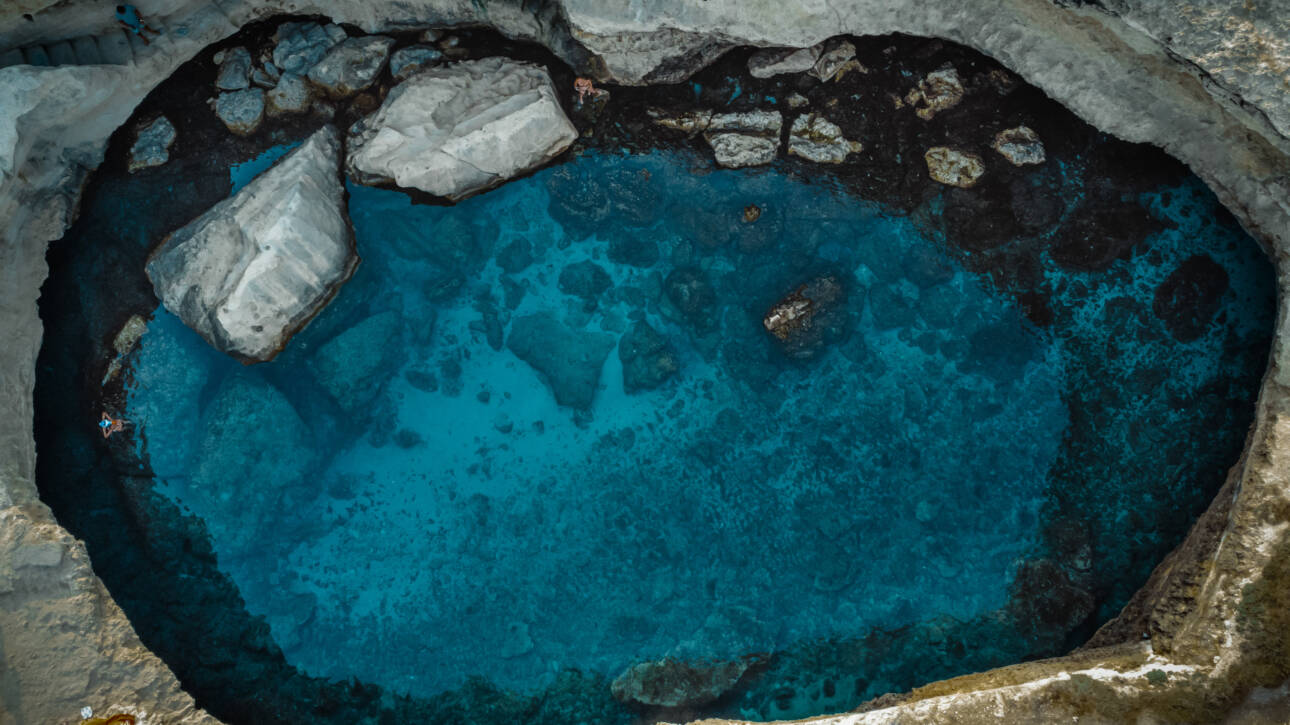
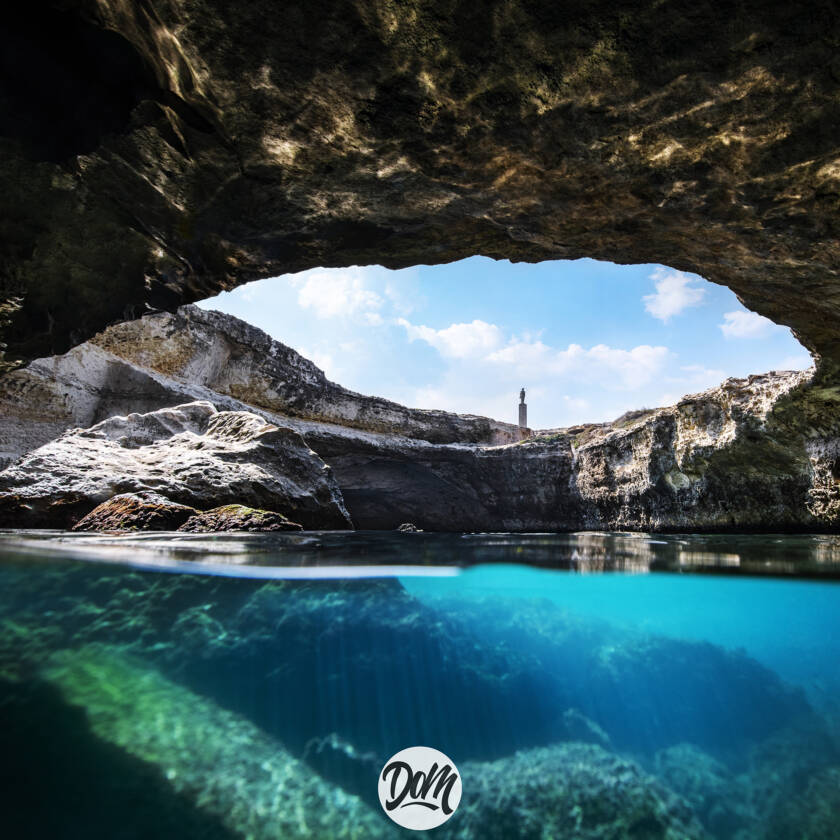
- Poesia Grande: the famous one, oval and about 30 × 18 metres, a few dozen metres from the shore. This is the “pool” in the photos.
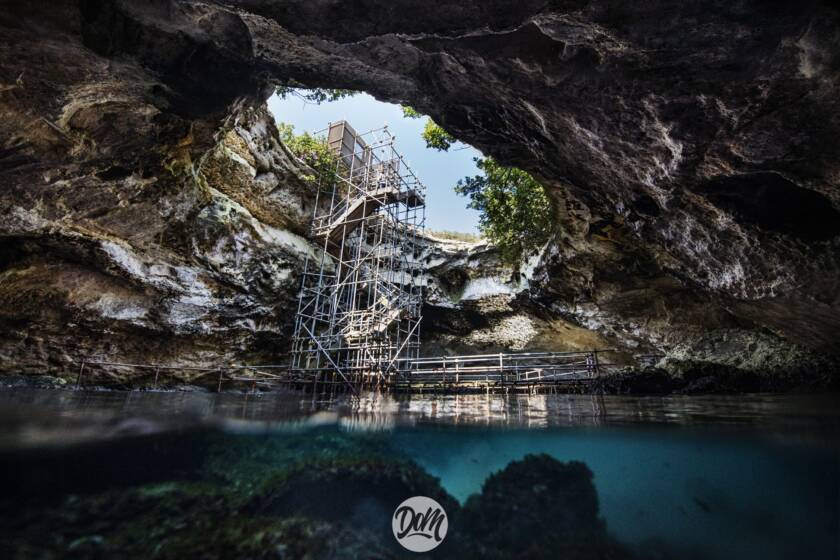
- Poesia Piccola: about 15 × 9 metres, further inland and linked to the larger cave by a tunnel. It is one of the most important inscribed sites in the Mediterranean, with hundreds of ancient inscriptions on its walls.
Both caves belong to the Roca Vecchia Archaeological Area, more than thirty hectares on a headland that was home to a Bronze Age fortress, a Messapian town and a medieval city. That is why visits are now regulated and ticketed.
There are two explanations for the name. The more likely one is the medieval Greek word posìa, “freshwater spring”, still used in the Greek-speaking villages of Salento: fresh water once rose inside the cave. The romantic one is a legend about a princess who bathed here, so beautiful that poets came from all over Salento to see her.
Why is it famous?
For two reasons that rarely go together. The first is beauty: turquoise water that changes colour with the light, pale limestone walls, the sea a few steps away. Travel magazines have repeatedly listed it among the most beautiful natural pools in the world, and for years it was famous for cliff jumping.
The second is history. In 1983 the archaeologist Cosimo Pagliara, of what was then the University of Lecce, discovered inscriptions in Messapic, Greek and Latin on the walls of the Poesia Piccola, together with older carvings of animals, sailing boats, spirals, hands and feet. Most inscriptions date from the 4th to the 2nd century BC and are prayers and dedications to a god called Taotor: the cave was a sanctuary visited by sailors and coastal communities.
That discovery led to the excavations that made Roca one of the key sites of Mediterranean prehistory. Read the full story in History & excavations, and meet the god in Taotor, the god of the Cave of Poetry.
Tickets and opening hours 2026
Since 18 July 2026, entry to the Roca Vecchia Archaeological Area, including both caves, requires a ticket. The site is run by the Municipality of Melendugno with a private partner (ArtWork Società Cooperativa Sociale), working with the University of Salento and the regional heritage authority (Soprintendenza).
- Standard: €5, entry to the archaeological area
- Experience: €10, guided visit with virtual reality
- Reductions: ask at the ticket office; residents of Melendugno enter free
- Where to buy: online at archeoroca.it or at the ticket offices in the Area Castello and Area Grotte della Poesia
2026 season hours: daily 9am–8pm in June and July; 9am–7pm in August and September; 9am–5pm from 27 September to 1 November. Winter hours and the 2027 calendar have not been published yet: always check the official website before you go.
Can you swim in the Grotta della Poesia?
No. Swimming and diving have been banned for some time because of the risk of rockfalls and to protect the archaeological site; under the 2026 rules it is also forbidden to enter the tunnels, ticket or not. Both caves are admired from above, along the marked path.
The ban has a real reason: the rock is a soft calcarenite, eroded by the sea and by thousands of visitors every summer. For a swim, the beaches of San Foca and Torre dell’Orso are a few minutes away. More in A heritage to protect.
How to get to the Grotta della Poesia
Roca Vecchia lies on the SP366, the coast road linking San Foca, Torre dell’Orso and Otranto: about 25 km from Lecce (30 minutes by car) and 20 km from Otranto. The nearest airport is Brindisi.
- From Lecce: take the provincial road towards Vernole and Melendugno to the coast, then the SP366 to Roca Vecchia
- From Otranto: drive north on the SP366, past Torre dell’Orso
- Parking: paid car parks near the archaeological area, a short walk from the entrance. Don’t park along the road
- By bus: in summer the Melendugno coast is served by Salento in Bus (in 2026 from 13 June to 13 September)
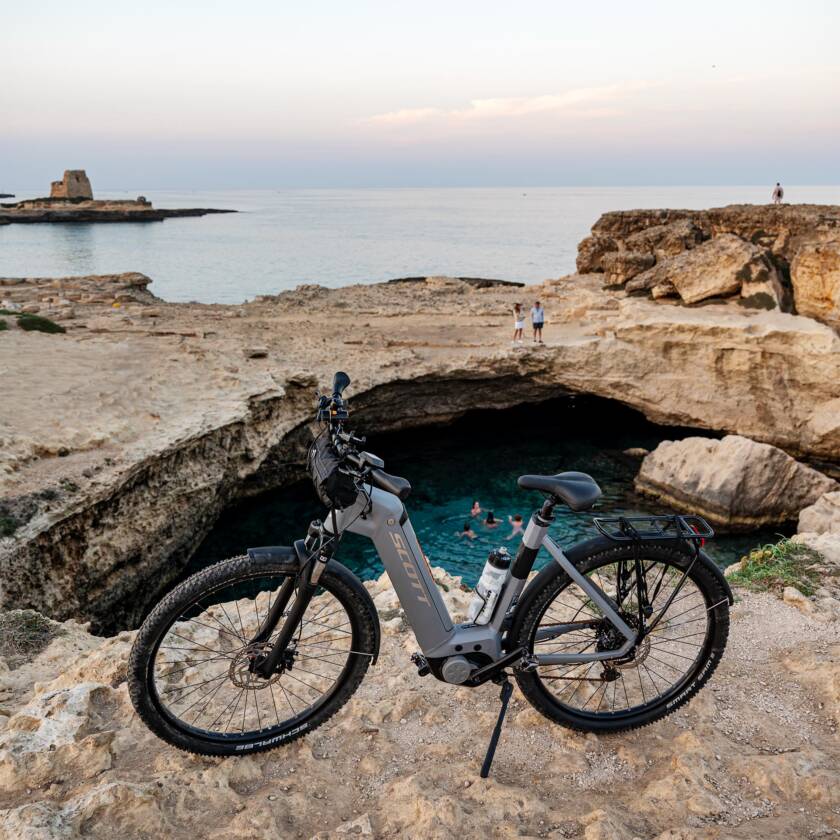
- By bike: San Foca and Torre dell’Orso are a few kilometres away along the coast. ApuliaOutdoor delivers bikes and e-bikes to your accommodation
When is the best time to visit?
From May to October the light is at its best and the site is open every day. In July and August come at 9am or late in the afternoon: fewer people, less heat, and low sunlight that brings out the colours of the water. May, June and late September are the most pleasant months, also for cycling.
What to bring
- Closed shoes or hiking sandals: the rock is uneven and slippery
- Water and sunscreen: the pale rock reflects the sun and there are no bars inside the site
- A ticket bought online on peak days
- A camera: the Poesia Grande looks best from above with a low sun
Is it suitable for children?
Yes, with care. The path is short but runs over bare rock with natural shafts and unfenced edges: hold small children’s hands. Tell them beforehand that there’s no swimming, and pair the visit with a morning on the beach at Torre dell’Orso. The official website offers family tickets.
What to see nearby
- The Roca Vecchia Archaeological Area: Bronze Age walls, Messapian walls, the medieval town. See our Roca Vecchia guide
- The Roca Vecchia tower, a 16th-century coastal watchtower on a rock just off the shore
- The sanctuary of the Madonna di Roca, a pilgrimage site documented since 1656
- Torre dell’Orso and the Two Sisters sea stacks, a little further south
- The Sant’Andrea sea stacks, among the most photographed cliffs in Salento
- San Foca, a small harbour and beaches just to the north
Get there by bike, at your own pace
ApuliaOutdoor is based in Melendugno, a few kilometres from the cave: we deliver bikes and e-bikes to your accommodation and give you the GPX track for a ride along the coast.
- Free delivery between Melendugno, Lecce and Otranto
- Scott e-bikes and premium bikes, helmet and lock included
- Local expert to plan the route, stops and tastings
Frequently asked questions
How much is the ticket for the Grotta della Poesia?
Since 18 July 2026, entry to the Roca Vecchia Archaeological Area, which includes the Poesia Grande and the Poesia Piccola, costs €5 (standard ticket). The Experience ticket, with a guided visit and virtual reality, costs €10. Ask at the ticket office about reductions; residents of Melendugno enter free.
Where can I buy tickets?
Online on the official website archeoroca.it or at the ticket offices on site (Area Castello and Area Grotte della Poesia).
Can you swim in the Grotta della Poesia?
No. Swimming, diving and entering the tunnels are forbidden, even with a ticket: both caves are viewed from above along the marked path.
What are the opening hours?
In the 2026 season the site was open daily 9am–8pm in June and July, 9am–7pm in August and September, and 9am–5pm from 27 September to 1 November. Check archeoroca.it for winter hours and the 2027 season.
Where is the Grotta della Poesia?
In Roca Vecchia, a seaside village of Melendugno (Lecce), on the SP366 coast road between San Foca and Torre dell'Orso: about 25 km from Lecce and 20 km from Otranto.
Why is it called the Cave of Poetry?
The name most likely comes from posìa, a medieval Greek word still used in the Grecìa Salentina for a freshwater spring. Legend prefers another story: a princess who bathed here and inspired poets.
Is it suitable for children?
Yes, with care: the path runs over uneven, slippery rock with natural shafts. Wear closed shoes, hold small children's hands and explain beforehand that swimming isn't allowed.
Keep exploring Roca
In-depth guides for travellers who want to understand the place, not just photograph it.
History & excavations
From the 1983 discovery to the Bronze Age walls: who studied the cave and what they found.
Roca Vecchia
Three thousand years on a headland: the Bronze Age fortress, the Messapians, the medieval town.
Taotor, the god of the cave
The Messapian deity invoked on the walls of the Poesia Piccola.