Protection · Responsible travel
Why you can no longer swim in the Grotta della Poesia, what changed in 2026 and how to visit without helping wear it away.
Updated 10 November 2026 · ApuliaOutdoor

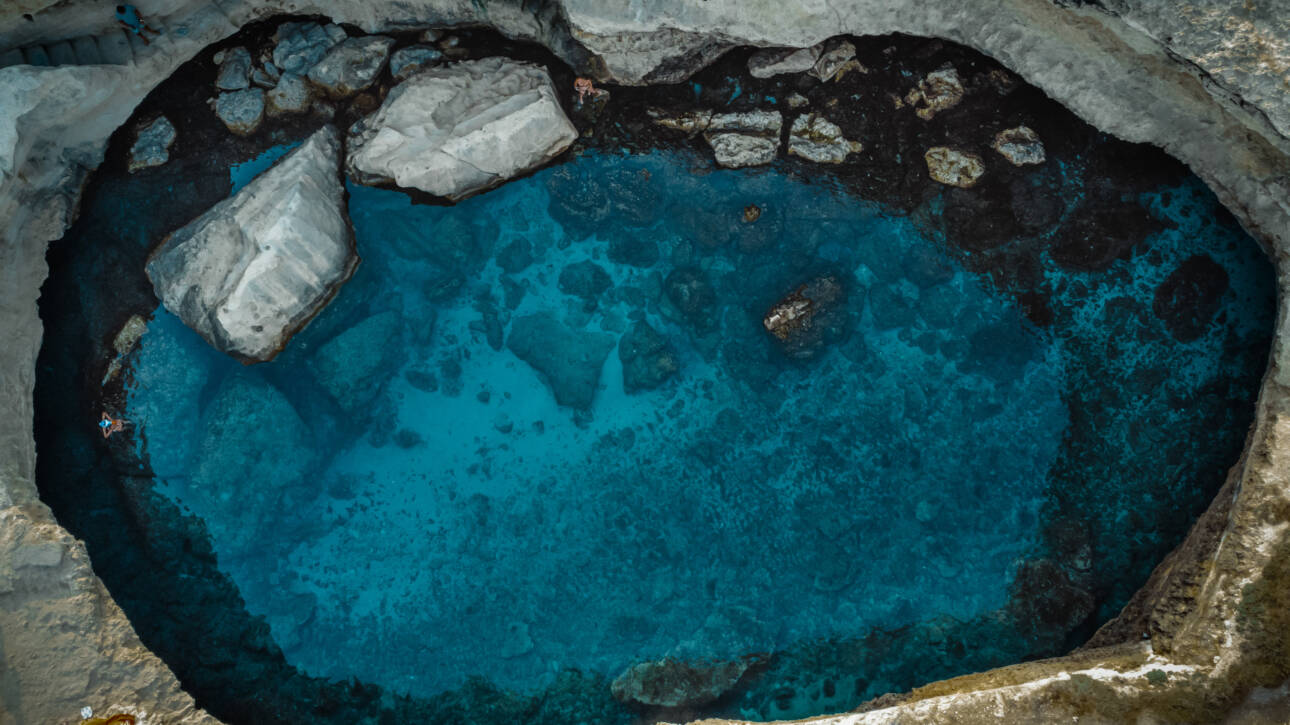
The Grotta della Poesia is made of calcarenite, a soft rock the sea has been carving for millennia: that is how the two pools formed, when the roofs of the caves collapsed. The same fragility is now a risk. The walls erode, edges can give way, and the footsteps of thousands of visitors every summer wear down the surface where inscriptions more than two thousand years old are carved.
A few years ago the cave was almost unknown. When photos of “the world’s most beautiful natural pool” went viral, visitor numbers exploded: jumps from the edge, people on the inscribed walls, litter. Hence today’s rules, which make the visit different, and better.
The site is run by the Municipality of Melendugno with ArtWork Società Cooperativa Sociale, in a 15-year renewable partnership with the University of Salento and the Soprintendenza. Official information at archeoroca.it.
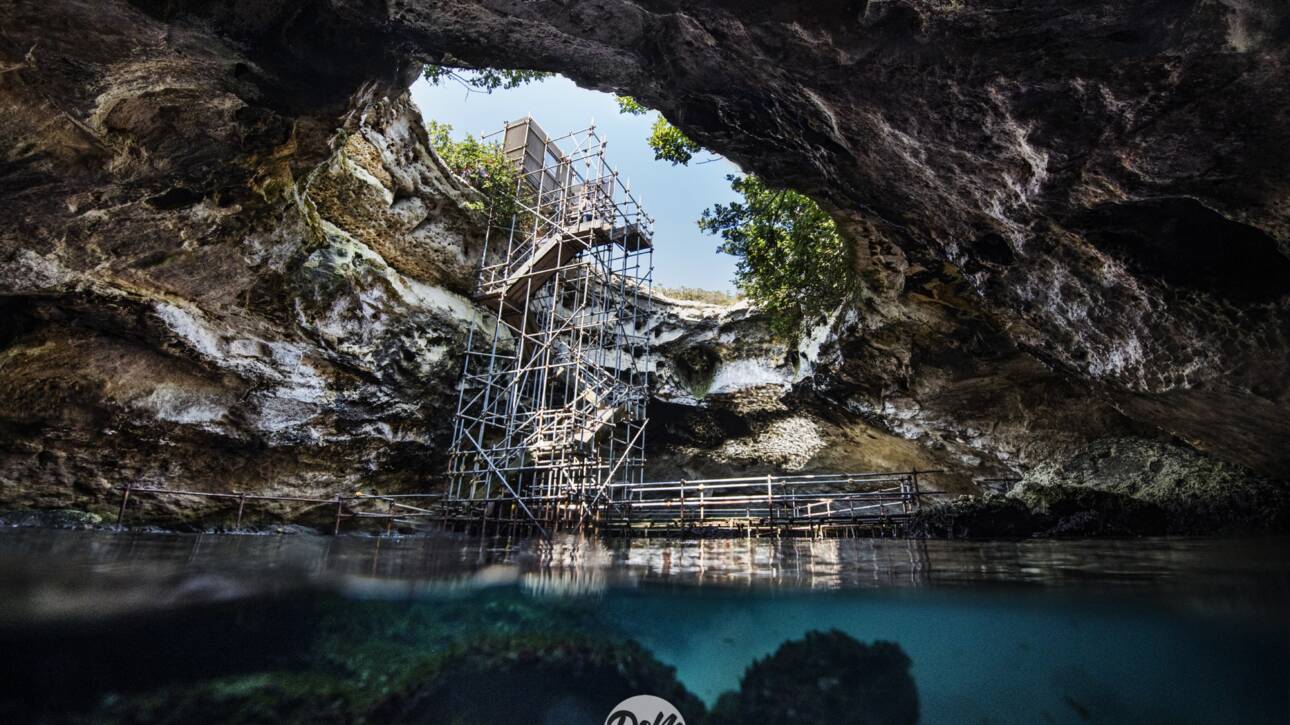
The inner cave is no ordinary pool: its walls hold carvings from prehistory onwards and hundreds of Messapic, Latin and Greek inscriptions, discovered in 1983 by archaeologist Cosimo Pagliara of the University of Lecce. They are dedications to Taotor, the god worshipped here between the 4th and 2nd centuries BC.
Scaffolding with a ladder was installed to study them, and it has become a problem in its own right: the heritage authority in Lecce is planning to remove the iron ladder, which damages the cave, and find another way in. Meanwhile the DigiRock project has created a laser-scanned digital twin that lets researchers study the walls without touching them. Full story in History & excavations.

For a swim, the beaches of San Foca and Torre dell’Orso are minutes away. The Grotta della Poesia is for looking at: that’s how it will reach the next generation intact.
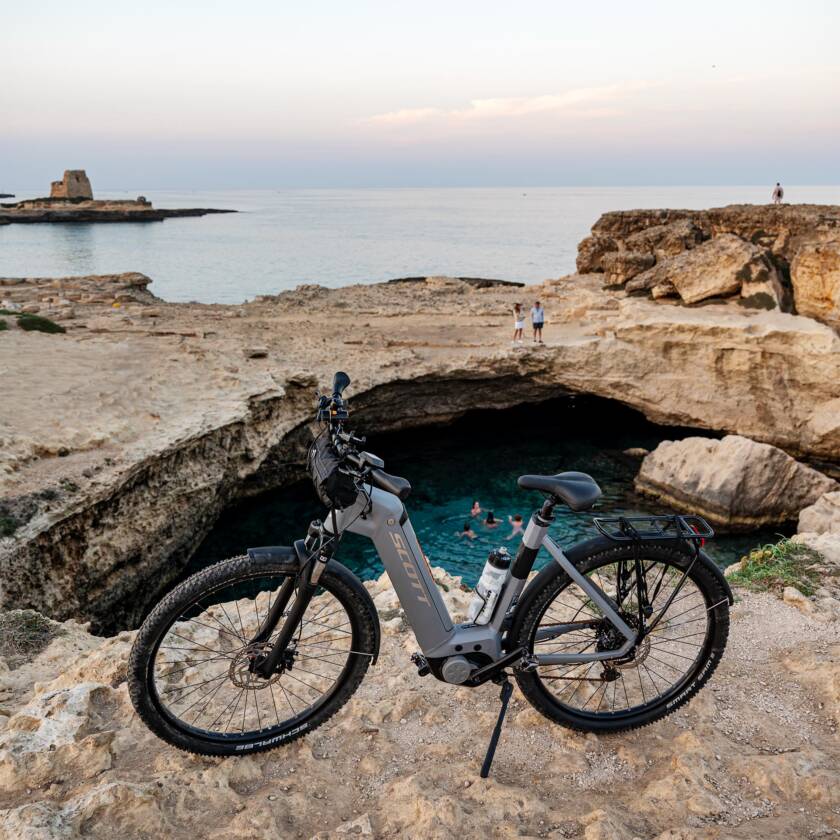
ApuliaOutdoor is based in Melendugno, a few kilometres from the cave: we deliver bikes and e-bikes to your accommodation and give you the GPX track for a ride along the coast.

In-depth guides for travellers who want to understand the place, not just photograph it.
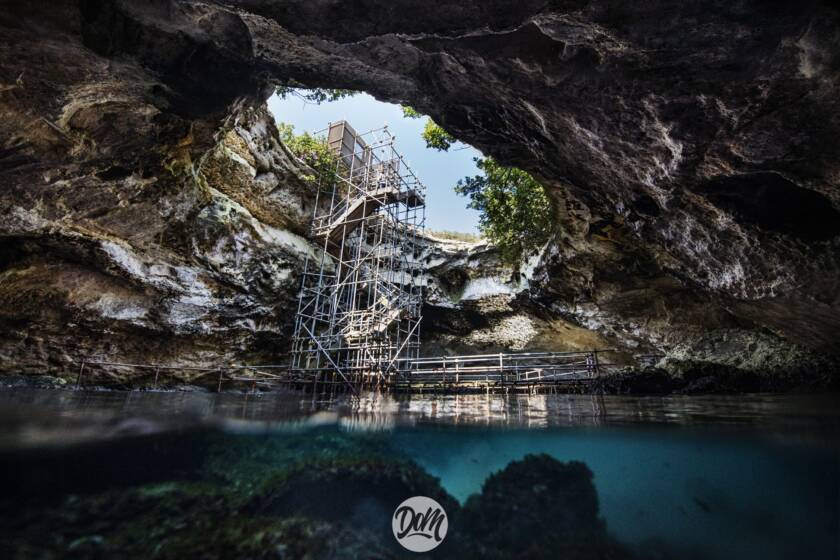
From the 1983 discovery to the Bronze Age walls: who studied the cave and what they found.
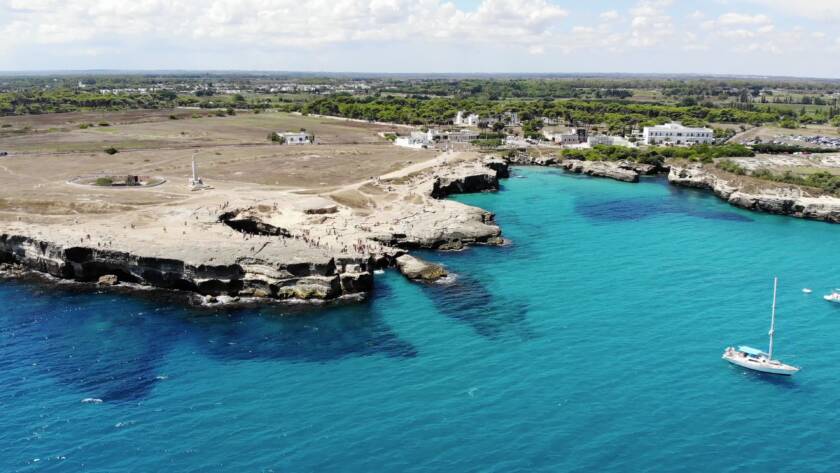
Three thousand years on a headland: the Bronze Age fortress, the Messapians, the medieval town.
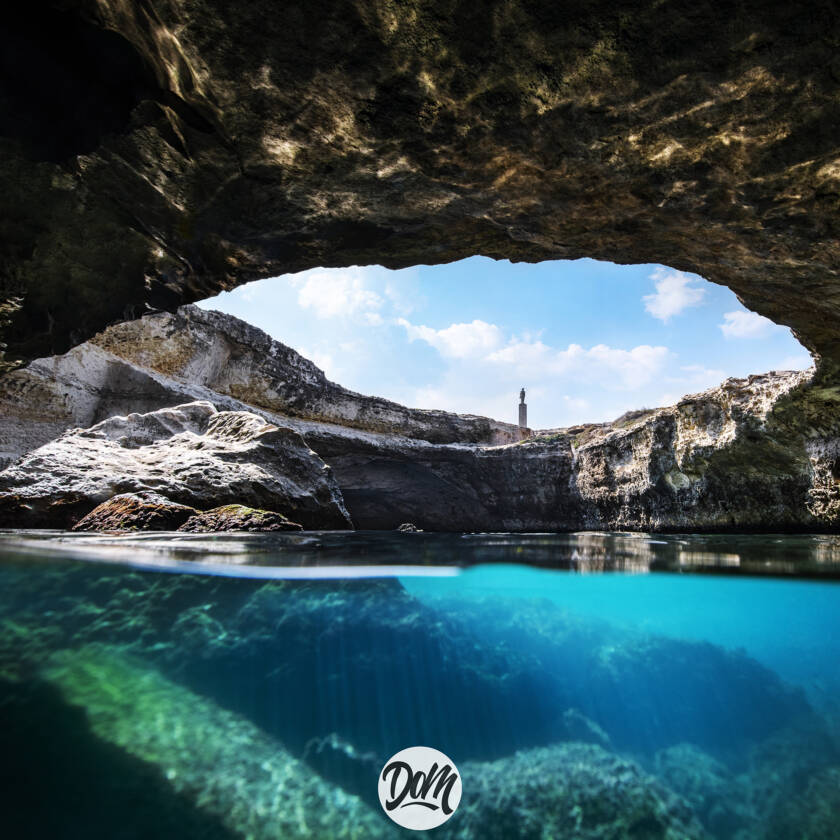
The Messapian deity invoked on the walls of the Poesia Piccola.