Myth · Messapians
Who was the deity that sailors and coastal people invoked on the walls of the Poesia Piccola, and what do we really know about him?
Updated 10 November 2026 · ApuliaOutdoor

Taotor was a god of the Messapians, the people who lived in Salento before the Roman conquest. Almost everything we know about him comes from one place: the walls of the Poesia Piccola cave at Roca Vecchia, where in 1983 archaeologist Cosimo Pagliara discovered hundreds of votive inscriptions in Messapic, Latin and Greek.
They are short texts carved into the rock between the mid-4th and the late 2nd century BC: names, dedications, requests for help. Many address a male deity called Taotor, with the epithet Andirahas. These inscriptions are what allowed scholars to recognise the cave as a sanctuary.
In Messapic inscriptions the name appears in several spellings: Taotor, Thaotor, Tator, Teotor, Tootor. In Latin it becomes Tutor, with the epithet rendered in forms such as Andraios. The shift is telling: Latin speakers recognised the local god as a “protector”, which is exactly what the Latin word tutor means.
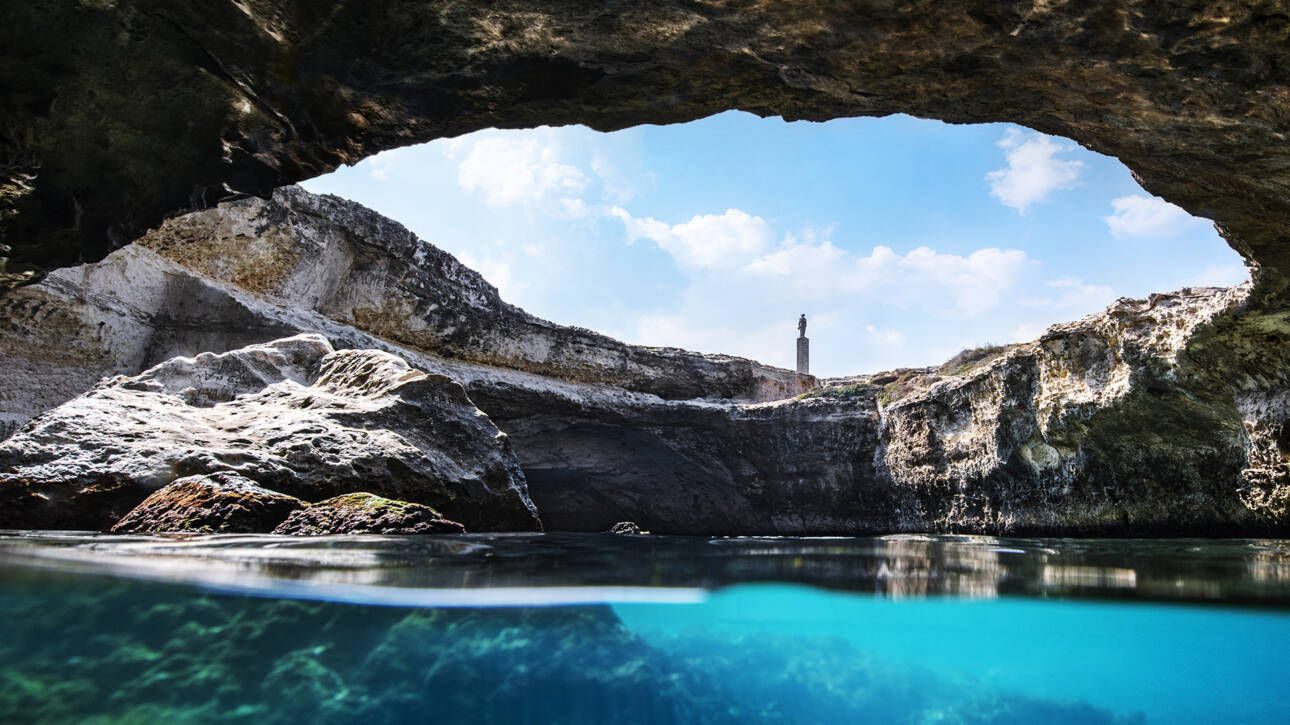
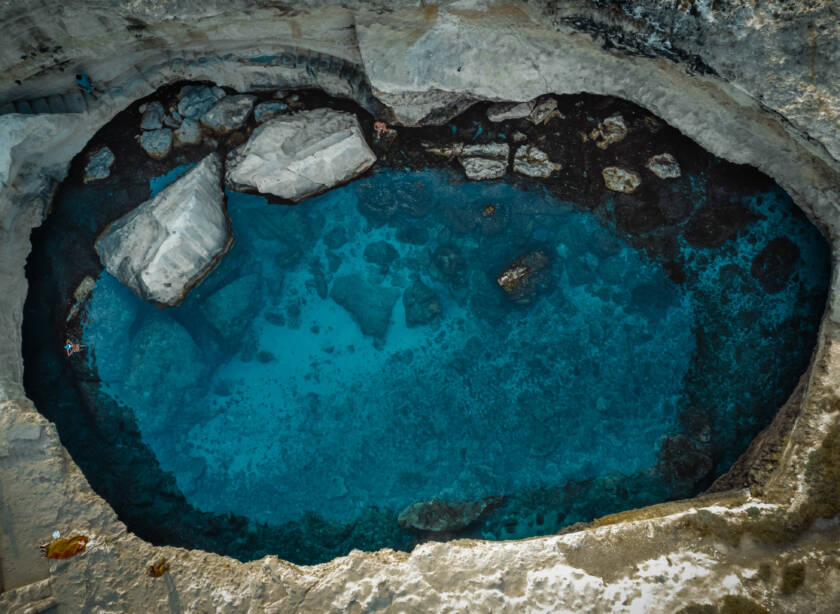
Picture the Poesia Piccola more than two thousand years ago: a partly covered cavity, reached from the sea or through a narrow passage, with a freshwater spring (the posìa that gave the cave its name). Visitors carved their names or a dedication into the rock, sometimes beside older signs: boats, hands, feet, spirals.
Who were the worshippers? The inscriptions reveal people of different backgrounds: villagers from Roca and the coast, merchants, sailors. The sanctuary overlooked the Strait of Otranto, the narrowest stretch of sea between Italy and the Balkans: it is natural to imagine those about to sail, or just returned, asking for protection on the crossing.
To be honest, we know little about Taotor, and his nature is still debated. There are three main readings:
The three readings don’t fully exclude each other: for a seafaring community, protecting, saving and giving strength could be one and the same. What is certain is that for at least two centuries the Poesia Piccola was a sacred place, and that Taotor is one of the very few Messapian divine names we know.
The Messapians lived in Messapia, ancient Salento, from the Iron Age until Romanisation. They used an alphabet derived from Greek and were writing by the 6th century BC, earlier than the other peoples of ancient Puglia. Their language is only partly understood, mostly through funerary and votive inscriptions, which is why the walls of the Poesia Piccola, with hundreds of texts in one place, are an exceptional archive.
Research has picked up again in recent years. The Uncovering Messapic Texts: Inscriptions from Grotta Poesia project, funded by the University of Oxford (2024–25), worked on the casts kept at the University of Salento: it separated overlapping inscriptions, corrected letters misread in the past and identified recurring dedicatory formulas, including previously unknown Messapic grammatical forms. Meanwhile the DigiRock project created a digital twin of the cave with high-resolution laser scans.
Every new reading adds a piece to the picture of Taotor. In the coming years we may learn more about who he was and what his worshippers asked of him.
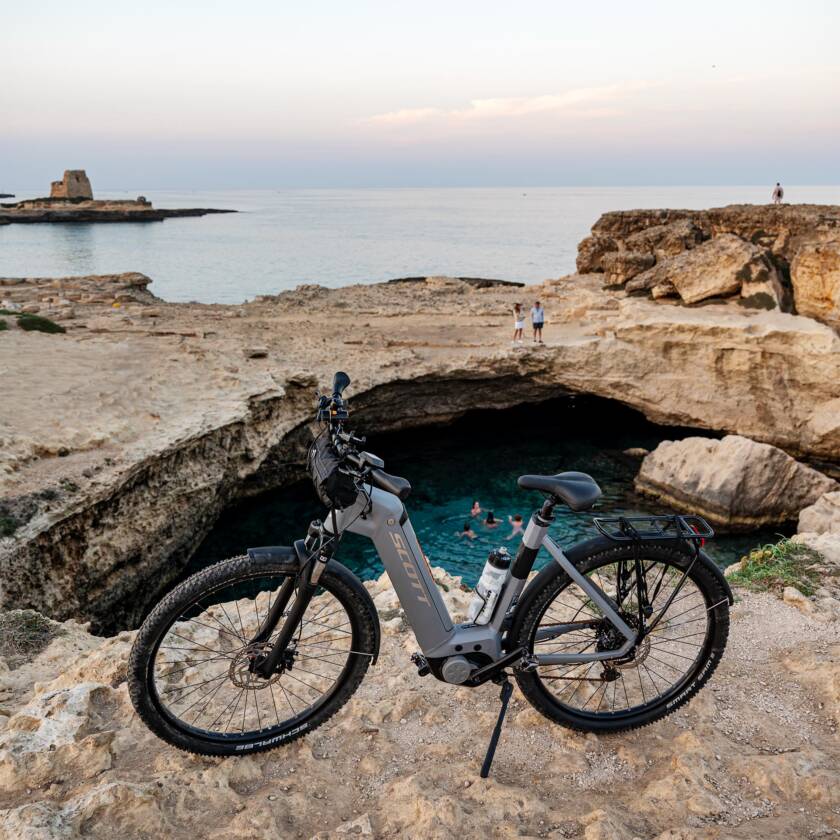
The name of the god of the Cave of Poetry also lives on in a cycling route: the Ciclovia di Taotor, the Adriatic Salento cycleway created by ApuliaOutdoor. The Taotor Trail starts at Roca Vecchia and follows the coast and inland roads to Otranto and Giurdignano, past the Cesine nature reserve, Acaya castle, the Grotta della Poesia, the Otranto mosaic, dolmens and menhirs. A way to visit the land of the Messapians at the right pace.
ApuliaOutdoor is based in Melendugno, a few kilometres from the cave: we deliver bikes and e-bikes to your accommodation and give you the GPX track for a ride along the coast.

In-depth guides for travellers who want to understand the place, not just photograph it.
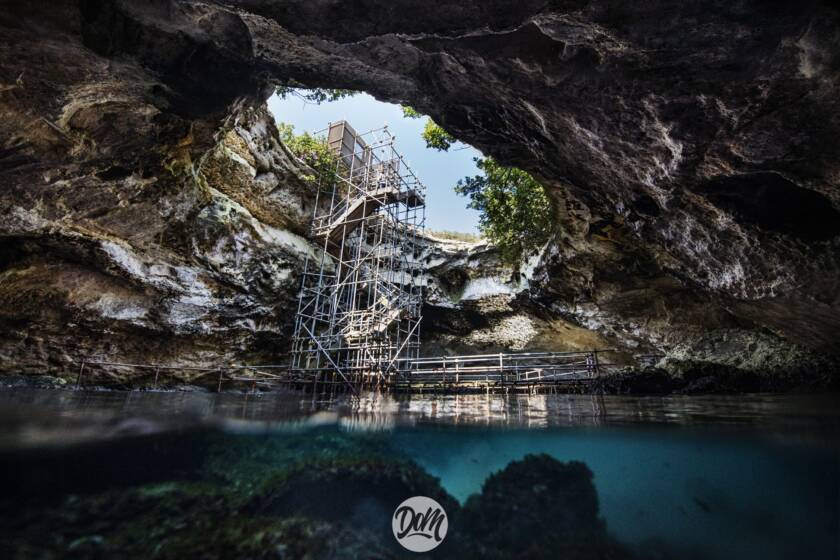
From the 1983 discovery to the Bronze Age walls: who studied the cave and what they found.
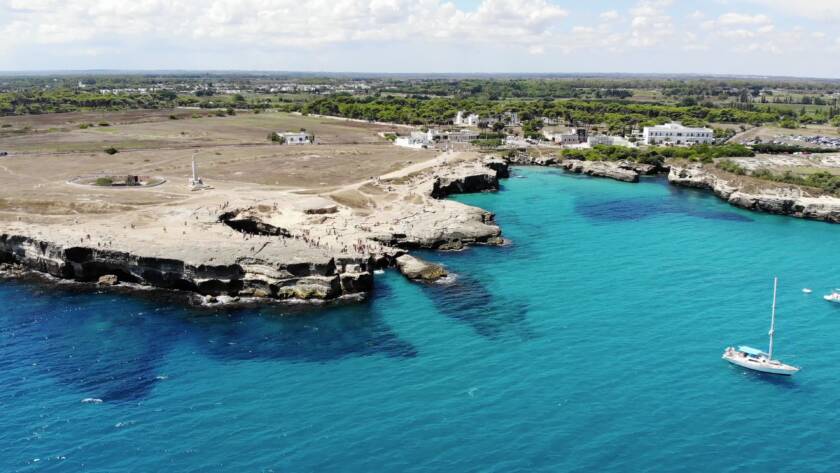
Three thousand years on a headland: the Bronze Age fortress, the Messapians, the medieval town.
Why swimming is banned and how to visit without harming the site.