Melendugno · Adriatic coast
Three thousand years on a headland over the sea: the Bronze Age fortress, the Messapian town, the medieval Roca of Walter of Brienne and its end in 1544.
Updated 10 November 2026 · ApuliaOutdoor

Roca Vecchia is one of the seaside villages of Melendugno, in the province of Lecce, on the Adriatic coast of Salento between San Foca and Torre dell’Orso. Today it is a small resort, but the headland stretching into the sea is an archaeological area of more than thirty hectares, inhabited almost continuously for over three thousand years. Its most famous spot is the Grotta della Poesia.
The coast looked very different then: erosion has pushed the shoreline back by about 300 metres, and behind the headland lay a lagoon that has since disappeared. A perfect position to control a landing place in the bay of Torre dell’Orso and the sea routes to the Balkans.
Roca’s story begins in the 17th century BC, when a settlement protected by massive walls rose on the headland, one of the most important of the Bronze Age Mediterranean. University of Salento excavations, launched after the 1983 discovery of the inscriptions in the Grotta della Poesia, uncovered the Monumental Gate, the posterns and a village with strong ties to the Minoan and Mycenaean world.
Between the 15th and 14th centuries BC a siege followed by fire destroyed walls and village; seven people who had taken refuge were found in Postern C. The settlement was rebuilt several times: in the 11th century BC it had a hut-temple holding bronze and gold objects, including two pairs of golden sun discs. Full story in History & excavations.
After more sporadic occupation in the Iron Age, in the 4th–3rd century BC the Messapians resettled the headland and enclosed it with a wall of about 1,400 metres, still clearly visible, with streets, houses, wells and cemeteries inside and outside. Some scholars identify Roca with Thuria Sallentina, mentioned by the Roman historian Livy.
In this period the Poesia Piccola was a sanctuary: people carved dedications and prayers to the god Taotor on its walls. After the Roman conquest the town declined; in the early Middle Ages the caves of the headland sheltered communities of hermits, mostly of Greek-Byzantine tradition.
In the early 14th century Walter VI of Brienne, Count of Lecce, refounded Roca as a fortified town with walls, a castle, two churches, one of Latin and one of Greek rite, and a market. Stretches of wall, the ruins of the castle and the citadel survive and are part of today’s visit.
In 1480, during the Ottoman invasion that struck Otranto, Roca’s inhabitants fled and the town was sacked and used as a base for attacks on other towns in Salento. Freed in 1481, it never recovered and became a haunt of pirates. To stop it becoming an enemy foothold again, in 1544 the governor of the province of Terra d’Otranto, Ferrante Loffredo, ordered its destruction.
The inhabitants scattered to inland villages such as Vernole, Calimera, Melendugno and Borgagne. In the second half of the 16th century, with the support of the King of Naples, some of them built a new fortified village a few kilometres inland: Roca Nuova, now uninhabited, on the road between Torre dell’Orso and Melendugno, with its terraced houses, the church of San Vito and a tower.
The bond with Roca lives on in the devotion to the Madonna di Roca. The sanctuary, built over an ancient crypt, has drawn pilgrims since at least 1656, and the Virgin of Roca is still celebrated in the villages where the refugees settled: Vernole on the last Saturday of April, Calimera on the first Saturday of May, Melendugno on the second and Borgagne on the third.

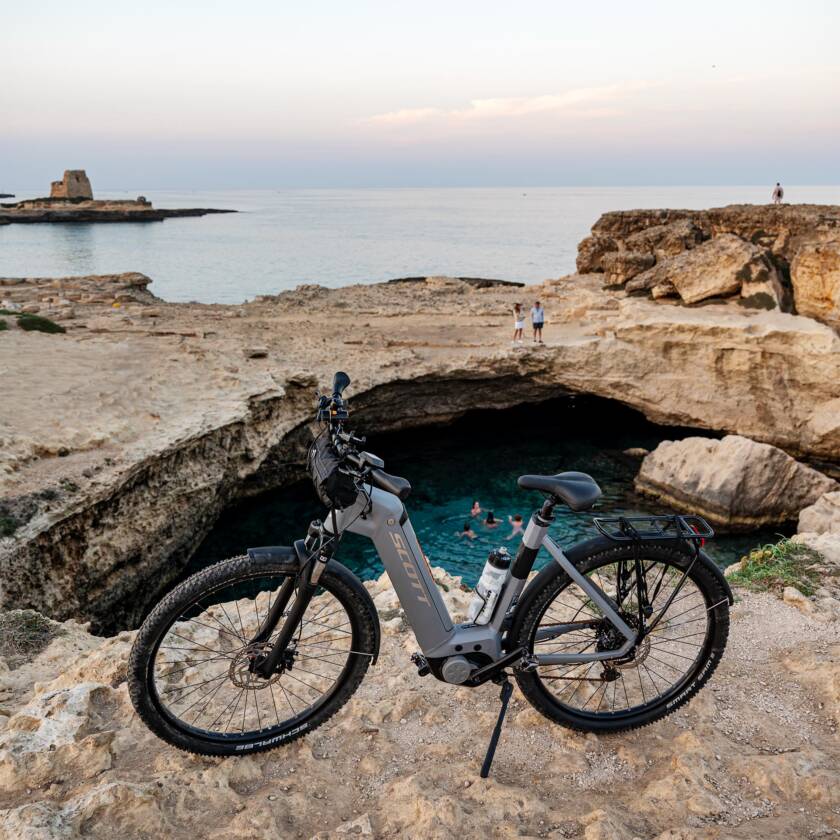
Since 18 July 2026 the archaeological area requires a ticket (€5 standard, €10 with guided visit and virtual reality), available at archeoroca.it or on site. The entrance is on the SP366 coast road, about 25 km from Lecce. Swimming in the caves is not allowed. The nicest way to arrive is by bike along the coast: San Foca and Torre dell’Orso are just a few kilometres away.
ApuliaOutdoor is based in Melendugno, a few kilometres from the cave: we deliver bikes and e-bikes to your accommodation and give you the GPX track for a ride along the coast.

In-depth guides for travellers who want to understand the place, not just photograph it.
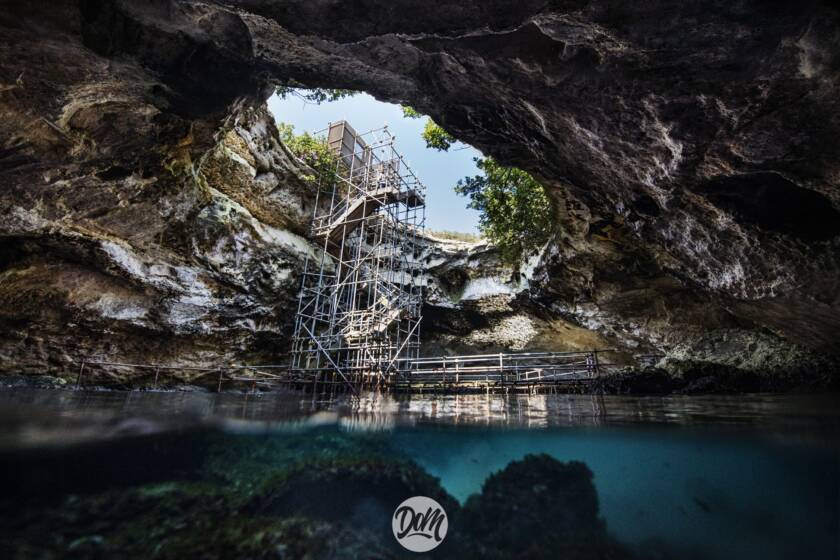
From the 1983 discovery to the Bronze Age walls: who studied the cave and what they found.
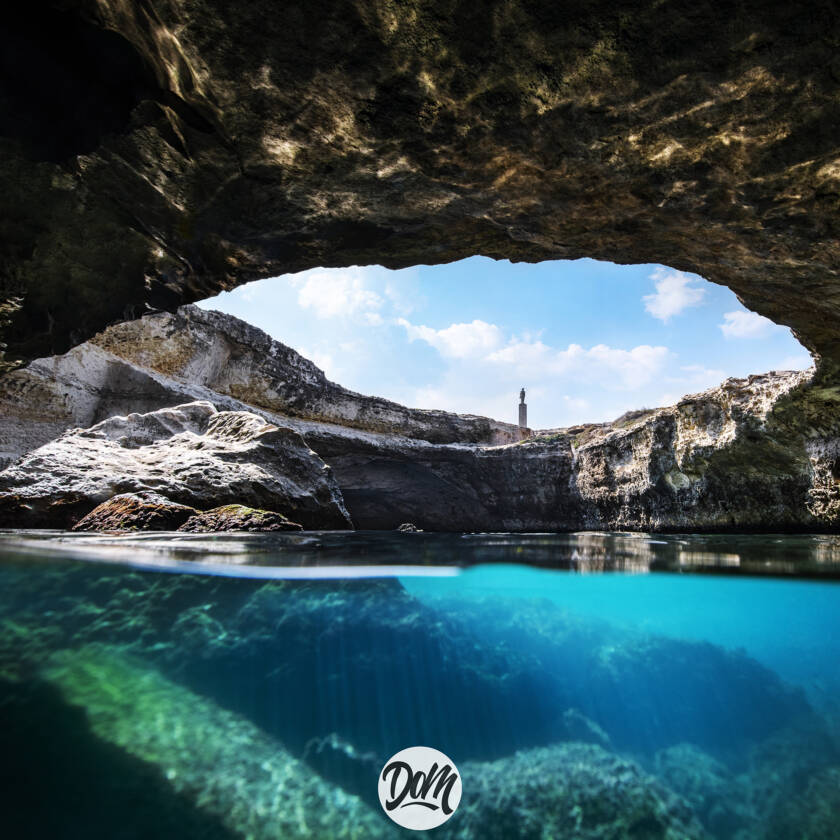
The Messapian deity invoked on the walls of the Poesia Piccola.
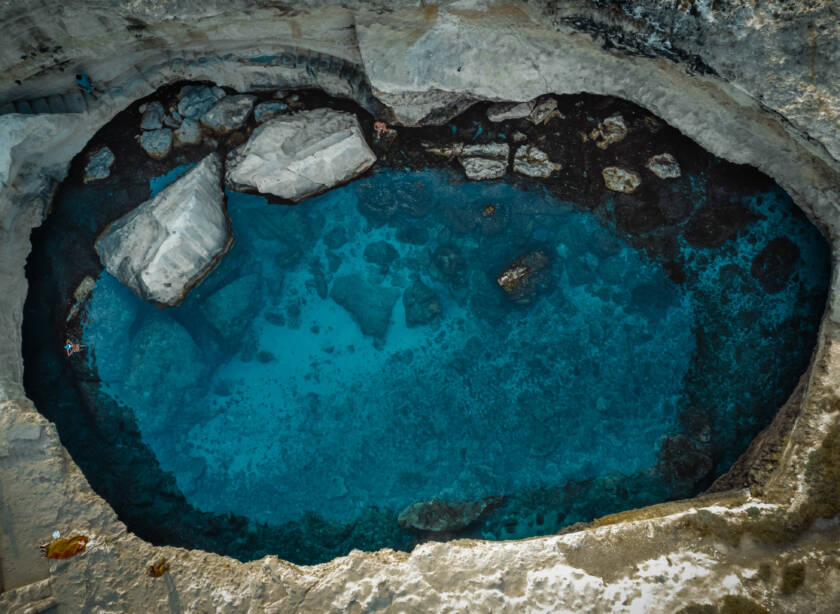
Why swimming is banned and how to visit without harming the site.